Well, part of that is owed to the fact they were basically using a speaking code, Cockney.


Well, part of that is owed to the fact they were basically using a speaking code, Cockney.


Or to Stranger in a Strange Land, at least the very beginning.


When you borrow $1M from the bank, it’s your problem. When you borrow $100M, it’s the bank’s problem.


Relevant XKCD, as always:

XKCD//2347


Hey everyone, that guy doesn’t know how to use the three seashells lol


I bet it’s just off-gassing the spine glue or cover coating or ink. Set them someplace outside but shaded and out of the elements for a few days.


There is certainly a lot to learn, and you would benefit greatly from joining the hobby officially. If you are US-based, you can take the amateur radio exam after memorizing the answers for the exam (a legal and encouraged practice), the exam itself can be administered remotely via Zoom.
I am beyond my technical knowledge if I tried to explain why we use transformers to get an impedance match; I only know what we do.


Great questions, one which highlights my own knowledge gap beyond knowing that for a given feedline and antenna combination, you’ll have some measure of impedance. At the most basic level, your radio will “see” some impedance value. In the amateur radio world this is generally 50Ω. If our antenna system (feedline + radiator) presents 450Ω (quite common), we use a 9:1 transformer to get it to match. This allows us to use our radio on that system without (1) stray current returning to the radio and damage our transmission circuits, and (2) at full power but with inherent loss of signal owing to antenna inefficiency.
Case in point, I have a commercially-purchased multi-band EFHW antenna which presents varying amounts of impedance to the radio. This system includes a transformer (I think it’s 9:1) so that on the bands of interest, there’s a resistance match and as a result an SWR that’s suitable to make decent transmissions on.
As a tangential example, J-pole antennas have a built-in matching system which uses no special parts. It’s composed of a matching section and radiator. The combination of matching section, radiator length, and physical feedpoint allow this type of antenna to sort of self-manage impedance.
The difference here is that a j-pole is a monoband antenna, and a long wire with transformer can often be functional on many bands, depending on length, where the lowest useable frequency is the inverse of its length.


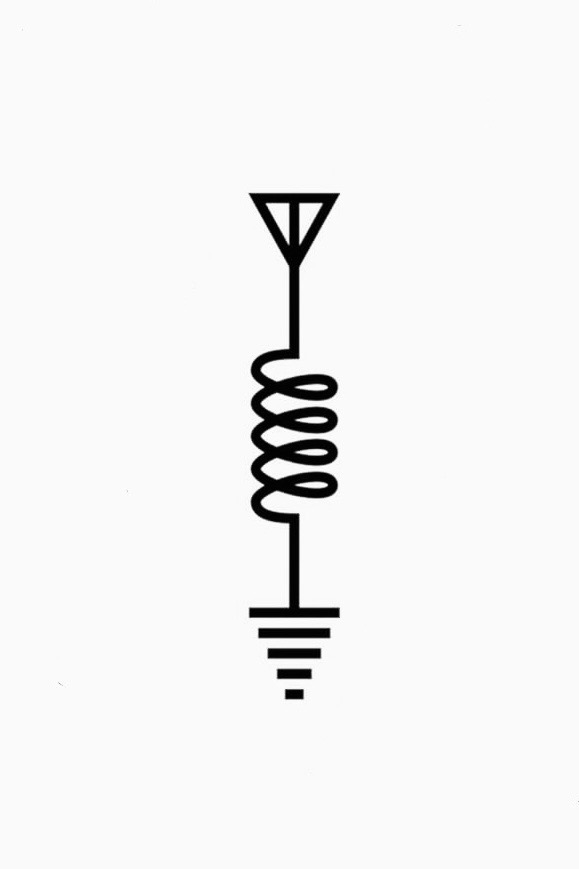
What challenges are you facing? It’s a small mercy that antenna fundamentals are basically the same across all frequencies. The resonant element must be sufficiently long as to present an impedance match (or be brought down through via a transformer; 9:1, 49:1, or whichever flavor you need).
On 40m (~7Mhz) a dipole would need to be ~67’ long. You can get away with shorter, bearing in mind the compromises which come with that.


I read all of that in Peter Capaldi’s voice. You made my day


Infinite Improbably Drive in Douglas Adams’ Hitchhiker’s Guide to the Galaxy.


Space cocaine is the best take on spice I’ve ever seen.


It’s what plants crave.
To be real, the worst part isn’t that we’re joking about it; it’s that it’s already happened:

One of the best no-noise locations I ever did was in a fully powered-down sailboat in the southern lagoon at Fort Jefferson, Dry Tortugas. Leaky consumer electronics are the worst.
To contrast, I managed to work Indonesia from Alamogordo NM despite being in a residential neighborhood, HVAC capacitors and foreign over-the-horizon-radar (OTHR) be damned. Taught me a lot about being patient and picking out transmissions in the noise.


I graduated to it from OneNote because it was way smoother, and I could type LaTeX equations much faster than dealing with the WYSIWYG editor in OneNote when I was doing math-intensive courses at Uni. Being able to hyperlink notes was a huge power-up. Really as easy as imagining one’s own personal Wikipedia. Brilliant.


I don’t doubt they would be able to figure it out, but we must at least acknowledge it’s not plug-and-play. If one doesn’t know their way around, paper maps take some planning. The paper map won’t announce the next upcoming turn in 2 miles. It definitely takes some learning to use.
I was curious to see if someone has ever documented this experience and I was rewarded with this video: https://youtu.be/sr9hQ_tDLP0


There are valid arguments for knowing how to use a paper map. We’re fortunate that GPS was opened up to the world, and we’ve flourished for it, but one very bad solar storm and it’s possible we’ll be back to paper for regional and farther navigation.


I browse in the restroom before returning to the cockpit.


All my homies use a circular one:

I can’t say that it has broad interest, but he FAA in the US publishes weather reports from many airports in the US called “METAR”. There is a publicly-accessible API you can use and the data is updated hourly or more and it contains a date-time group so you can check freshness of the data.